
📋 Table of Contents
📌 Read in :
 Français (French)
What to do in Antalya? On the Turkish Riviera, Antalya is one of those destinations that effortlessly combines sea, heritage, and a relaxed lifestyle. People often come primarily for the sun, beaches, and coastal hotels, but the city deserves much more than just a seaside holiday. Antalya boasts a charming old town, a historic harbour nestled beneath its ramparts, Roman gates, excellent museums, long promenades along the waterfront, and several major excursions within easy reach.

In just a few days, you can go from a narrow street in Kaleiçi to a large urban beach, from a waterfall cascading into the sea to a nearly intact Roman theatre, and then end the day overlooking the Mediterranean cliffs. First, here’s a clear FAQ to help you plan your trip, followed by eight unmissable experiences to discover the city.
🗒️ Dates and hotels: what you need to know before visiting Antalya
Before we get into things to do in Antalya, here are some useful tips.
What is the best time to visit?
Antalya can be visited year-round, but the most pleasant time is generally from spring to early autumn. Spring is ideal for exploring Kaleiçi, the major cultural sites, and the waterfalls without the intense heat. Summer is the peak season for beach tourism, with a vibrant atmosphere on the beaches and seafront. September and October often offer an excellent compromise, with pleasant sea temperatures and milder weather for sightseeing.
How many days should I plan for?
Two days are enough to see the essentials of Antalya: Kaleiçi, Hadrian’s Gate, the old port, Konyaaltı, the Antalya Museum, and a viewpoint or waterfall. With three days, the trip becomes more balanced, as you can add Düden and a longer excursion such as Aspendos or Perge.
Four days or more allows you to enjoy Antalya at a more relaxed pace, between heritage, swimming, walks and excursions to the ancient sites of the region.
How to get around easily in Antalya?
Antalya’s old town is best explored on foot, especially around Kaleiçi, the marina, and the city’s main landmarks. For longer journeys, public transportation is useful, particularly the AntRay tram and city buses. A car isn’t essential for a city-focused stay. It becomes particularly useful if you plan to take numerous excursions into the surrounding countryside.
How do I get to the city centre from the airport?
Antalya Airport is connected to the city centre by bus and the AntRay line. The AntRay line serves the airport, the city centre, the intercity bus station, and Fatih, making it a convenient option for reaching the city without complicated transfers.
Is there a useful pass for visiting the city?
Yes, if you’re planning several cultural visits. The Museum Pass The Mediterranean grants access for 7 days to over 40 museums and sites managed by the Ministry of Culture in the provinces of Antalya, Mersin, Adana, and Denizli. It can be particularly worthwhile if you’re combining Antalya with places like Perge, Aspendos, Termessos, or other ancient sites in the region.
Where to stay in Antalya + three popular hotels
For a first visit, Kaleiçi is ideal if you want to stay close to the historical atmosphere, the narrow streets, the old port, and the restaurants. The more modern coastal area will suit those who prefer a sea view, larger hotels, and easier access to the city beaches. The most important thing is to choose based on the balance you’re looking for between heritage and a beach holiday.
The Akra Antalya is well-suited for those seeking a large, contemporary hotel with sea views in the city. The RuinAdalia will appeal more to travellers who want to stay in Kaleiçi, in a more historic setting. Finally, the Tuvana Hotel is also a good option for staying in the heart of the old town, in a more intimate atmosphere.
Is Antalya an expensive destination?
Antalya can accommodate very different budgets. The city has both large, high-end hotels and more affordable options, while an important part of the experience is based on simple pleasures: walking in Kaleiçi, enjoying Konyaaltı, admiring the cliffs, seeing the waterfalls and discovering some great cultural sites.
What are the must-do things in Antalya?
Now let’s get to the heart of the matter and see what there is to do in Antalya. Only the must-sees, of course.
Stroll through Kaleiçi and pass under Hadrian’s Gate
If there’s one thing you should do first in Antalya, it’s entering Kaleiçi through Hadrian’s Gate. This Roman gate, built in 130 AD in honour of Emperor Hadrian, marks a clear transition between the modern city and the historic core. Once through it, you’ll find narrow streets, old houses, city walls, staircases, small courtyards, and that wonderful feeling of entering a slower-paced, denser, almost separate city. Kaleiçi is the perfect place to begin a trip because it combines history, walking, and atmosphere in a small area.
Take your time to wander around, without following a rigid itinerary. The charm comes as much from the monumental landmarks as from the details: a house facade, a climb towards the ramparts, a discreet terrace, a sudden view of the sea. It’s also in this area that you best understand that Antalya is much more than just its beaches or resorts.

Head down towards the old port and take a boat trip
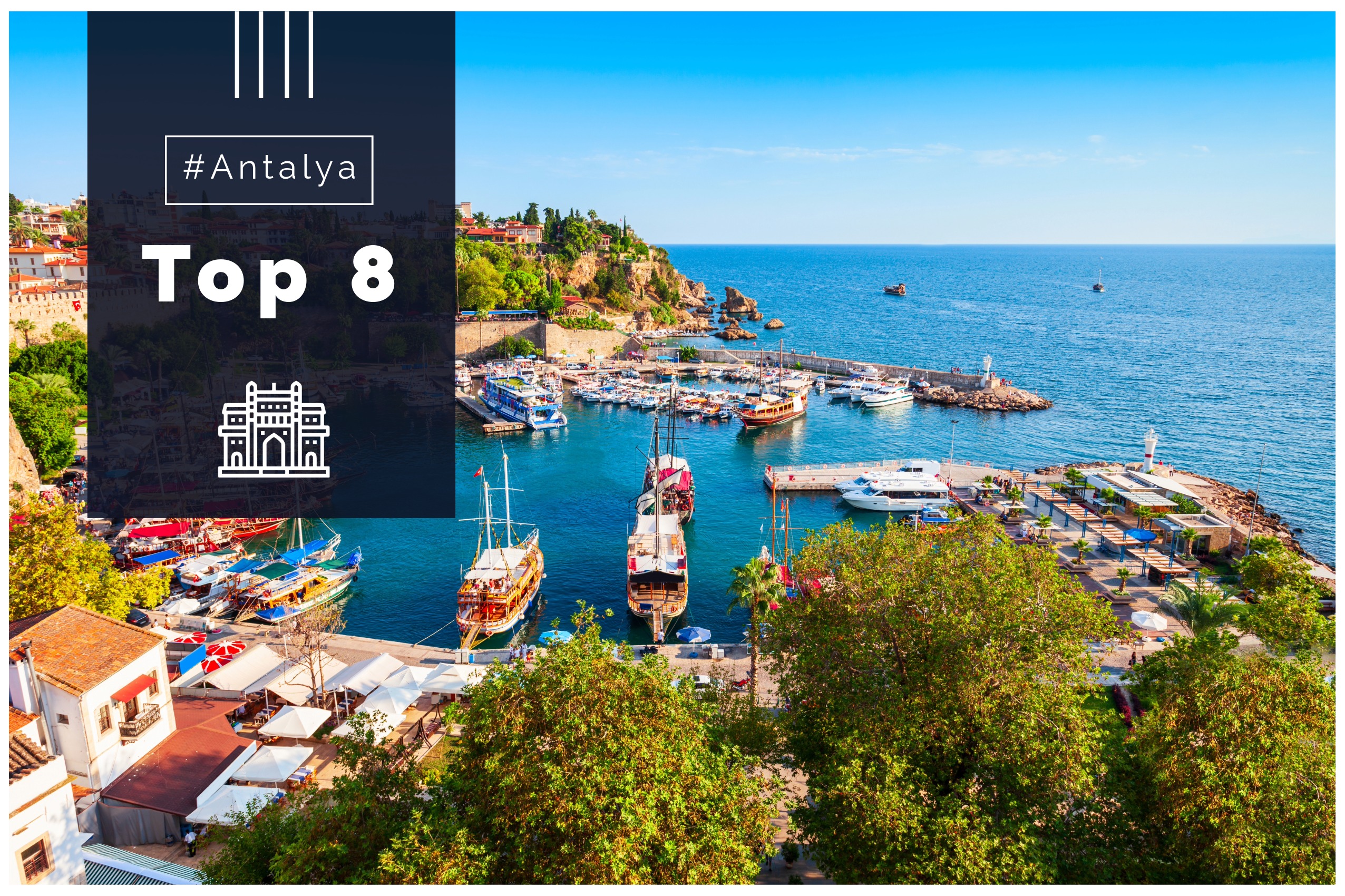
After Kaleiçi, you naturally have to head down towards the historic marina. Antalya’s old port is nestled at the foot of cliffs and ramparts, giving it a very distinctive presence. Here you’ll find both the classic Mediterranean image of boats and a real sense of protection, as if the old town were closing in on itself above the water. It’s an ideal area for walking, taking photos, relaxing on a terrace, or simply watching the comings and goings of the port. Even without going on a boat, the place is well worth a visit.
But the most interesting thing is often to use it as a starting point for a short trip out to sea. From the marina, there are excursions that allow you to travel along the cliffs and approach the Aşağı Düden area from the water.

Visit the Antalya Museum
The Antalya Museum is one of the most important cultural attractions in the city. It houses collections spanning a very long period, from the Alteolithic era to the Roman period, with a major focus on the region’s large ancient sites.
It’s also a particularly useful museum for providing context to the trip, as Antalya is surrounded by major sites like Perge, Aspendos, Termessos, and Phaselis. Without this detour, you’ll see monuments; with it, you begin to better understand the historical depth of the entire coastline.
Enjoy Konyaaltı, the large urban beach
Konyaaltı is one of Antalya’s simplest and most enjoyable experiences. This large urban beach stretches for approximately 7 kilometres between the cliffs and mountains of Beydağları. It offers a very different feel from Kaleiçi: more open, more expansive, more modern, with a real sense of space. It’s the perfect place for a refreshing swim, a stroll along the water’s edge, or a relaxing late afternoon by the sea. In a city where sightseeing and heritage sites are easily combined, this beautiful coastal interlude provides a welcome balance to your stay.

See the Düden waterfalls, especially where they plunge into the sea
Among Antalya’s most striking natural sites, the Düden Falls hold a special place. They are divided into two main sections: Yukarı Düden, further north, and Aşağı Düden, the most visually spectacular part, which plunges into the Mediterranean from a cliff approximately 40 meters high. It is this latter image that often remains the most vivid in the minds of travellers. It encapsulates perfectly one of Antalya’s unique characteristics: a coastline where nature creates powerful visual effects without being far from the city centre.
A visit to Yukarı Düden is also worthwhile, particularly for its greener atmosphere, walking paths, and the presence of a cave in the area. The two experiences complement each other: one is more spectacular facing the sea, the other cooler and more verdant.

Admire the Yivli Minare complex and the Seljuk heritage
Antalya isn’t just about its Roman and seaside past. The Yivli Minare complex also recalls the city’s role in Seljuk history. Located in the historic centre, it’s one of Antalya’s major landmarks. The easily recognizable fluted minaret is one of the city’s symbols, and the complex includes several buildings from the Seljuk period. This site offers a different perspective on Kaleiçi, one that is more Islamic and medieval, and it greatly enriches our understanding of the old town.

Take the excursion to Aspendos, one of the region’s greatest classics
If you have half a day or a full day to spare, Aspendos is the most obvious day trip from Antalya. The site is most famous for its Roman theatre, considered one of the best-preserved in Turkey and even the Roman world. Its acoustics are renowned, and the venue still hosts concerts and performances. Even for travellers who aren’t particularly interested in archaeology, the effect is immediate: the theatre impresses with its state of preservation, its size, and the clarity of its design.
Aspendos complements perfectly Antalya city. While the museum helps to understand the region, the excursion provides access to one of its greatest monuments in its full scale. The site is quite easy to incorporate into a multi-day stay, especially if you enjoy alternating between city life and ancient heritage.

Go to Perge, another major ancient site nearby.
Perge is another great day trip to consider from Antalya. Located about 17 kilometres east of the city centre, this ancient city dates back to ancient times and is of major importance to the history of Pamphylia. Although some areas are currently undergoing restoration, the site remains one of the region’s major archaeological landmarks. Its appeal lies in the fact that it clearly reveals the scale of a true ancient city, and not just an isolated monument.

There you have it! We hope this list of things to do in Antalya has helped you plan your trip. Have a great trip!