📋 Table of Contents
📌 Read in :
 Français (French)
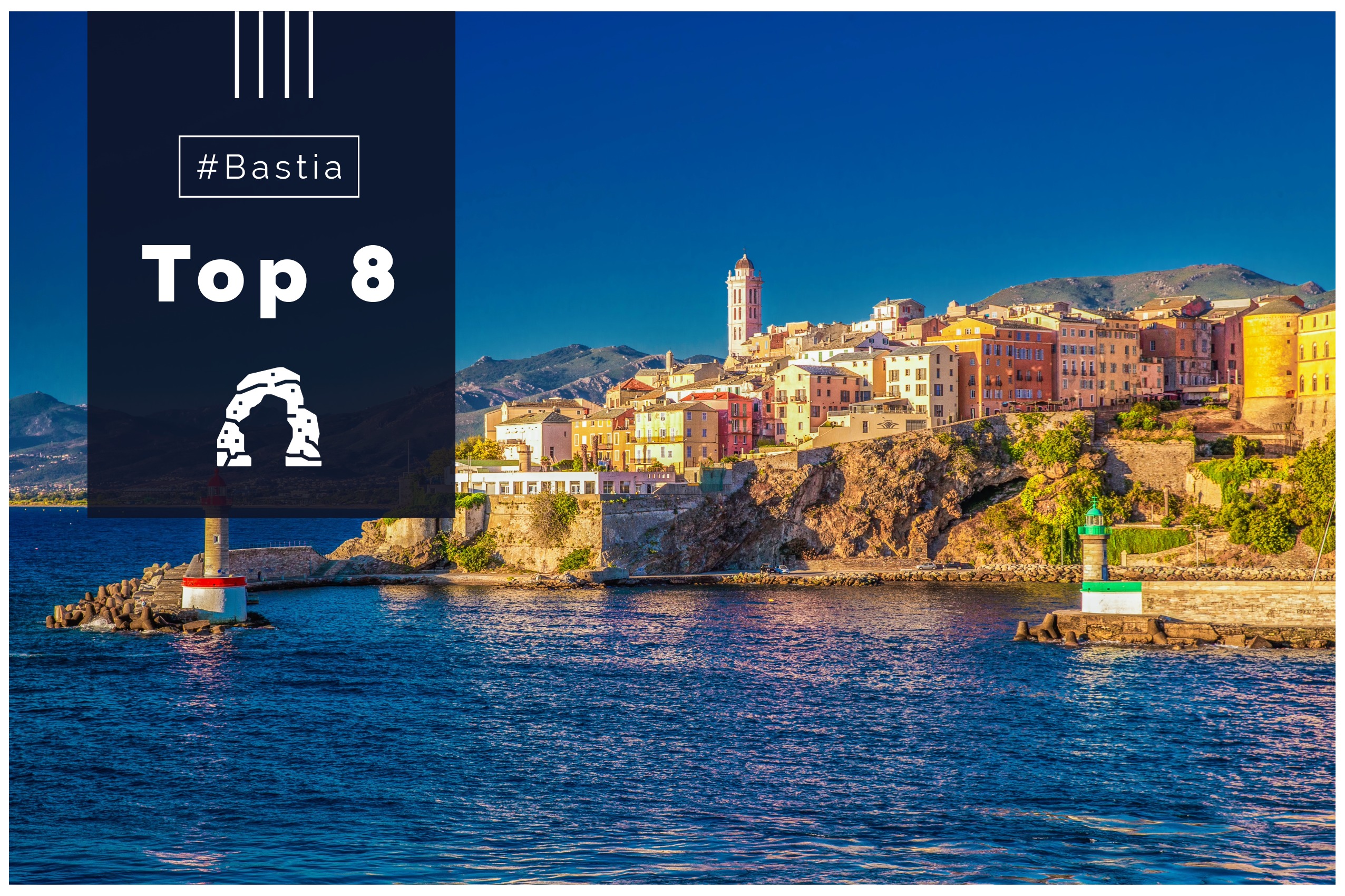
What to do in Bastia? Long considered a mere gateway to Corsica thanks to its port, Bastia deserves far more than just a ferry arrival or departure. The city boasts one of the island’s most captivating charms, with its dense old town, its hilltop citadel, its lively old port, its Baroque churches, its squares opening onto the sea, and that very particular blend of Italian elegance, popular energy, and Mediterranean charm. Here, everything seems to tell the story of a city oriented towards Genoa, and then towards the whole of Corsica. In just a few days, you can alternate between markets, museums, seaside strolls, shaded staircases, port side terraces, and excursions to the first roads of Cap Corse. First, here’s a helpful FAQ to prepare your stay, followed by eight unmissable experiences to truly discover Bastia.
🗒️ Dates and hotels: what you need to know before visiting Bastia
Before we get into things to do in Bastia, here are some useful tips.
What is the best time to visit?
Bastia can be explored year-round, but the most pleasant times are from April to June and then from September to October. Spring bathes the city in soft light, with a still-green hinterland and ideal temperatures for walking. Summer is obviously perfect for swimming, enjoying time on terraces, and spending evenings on the Old Port, but it’s also the busiest season.
September often offers the best balance, with warm seas, a slightly calmer pace of life, and a very pleasant atmosphere in the city centre. In winter, Bastia retains its charm: fewer crowds, a climate often milder than expected, museums, cafes, and a more local feel.
How many days should I plan for?
Two days are enough to discover the essentials of the historic centre, from the Old Port to the citadel, including Place Saint-Nicolas and the main churches. With three days, you can take your time, visit the Bastia Museum, walk to the Romieu Garden, enjoy a swim, or venture a little further afield to Cap Corse. Four days or more allows you to alternate between genuine urban exploration and broader excursions, taking the time to truly experience the city rather than simply sightseeing. Bastia is perfect for a long weekend, but it’s best enjoyed at a leisurely pace.
How to get around easily in Bastia?
Bastia’s city centre is easily explored on foot, provided you’re willing to tackle some hills and stairs, especially between the Old Port, the citadel, and the higher neighbourhoods. To reach more distant areas, such as the southern beaches, some outlying districts, or neighbouring villages, buses remain useful, as does the Corsican train for travelling along the coast or to other towns on the island.
If you arrive by car, it’s best to avoid driving too much in the old town and opt for parking lots, especially around Place Saint-Nicolas or near the port entrances. Bastia is a city best explored on foot, and that’s probably the best way to discover it.
How do I get to the city centre from the airport?
Bastia-Poretta Airport is located about 20 kilometres south of the city. The journey to the city centre is relatively quick by car or taxi. Public transport connections are also available, notably via Casamozza train station or certain shuttle services depending on the season. If you arrive late or with a lot of luggage, a taxi remains the simplest option. If you are travelling light and prefer budget-friendly solutions, it is easy to arrange your arrival, provided you check the schedules in advance.
Is there a useful pass for visiting the city?
Bastia doesn’t offer a city pass as comprehensive as some major capitals, but several cultural sites and institutions can be cleverly combined throughout your stay. The best approach is often to organize your visits around the historic centre, museums, and one or two walks, rather than looking for a single, all-inclusive pass.
Three popular hotels in Bastia
Staying in the city centre or around the Old Port allows you to fully experience Bastia’s atmosphere, especially in the evening. The citadel offers a more intimate and historic ambiance, with magnificent sea views. The area around Place Saint-Nicolas is very convenient for exploring on foot, while remaining close to the train station and the port. Finally, some hotels located a little further from the historic centre, by the sea or towards Toga, will be better suited to those seeking more peace and quiet, views, and sometimes easier access by car.
The Hôtel des Gouverneurs, located in the citadel, charms guests with its exceptional location, boutique hotel atmosphere, and spectacular sea views. The more contemporary Hotel Ostella is appreciated for its comfort, large wellness area, and convenience for those travelling by car or on business. The Hotel Alivi, at the entrance to Cap Corse, offers a more seaside ambiance with a swimming pool, panoramic views of the Mediterranean, and a sense of tranquillity, all while remaining close to the town centre.
Is Bastia an expensive destination?
Bastia remains generally more affordable than some other Corsican seaside resorts, although prices rise significantly in the summer. Accommodation can become expensive during peak season, especially in the most sought-after areas. However, walking, exploring the city’s heritage, and experiencing local life make it easy to enjoy Bastia without breaking the bank. By avoiding the peak season or booking early, Bastia can be a very pleasant destination with a relatively reasonable budget for Corsica.
🔝 What are the must-see things to do in Bastia?
Now let’s get to the heart of the matter and see what there is to do in Bastia. Only the must-sees, of course.
Strolling along the Old Port
The Old Port is probably Bastia’s most beautiful feature. Enclosed by tall buildings, bustling quays, terraces, fishing boats, and small vessels, it embodies the very soul of the Mediterranean city. It’s a place to be observed at different times of day: early in the morning when shutters open, at midday when the terraces fill up, and then in the evening when the light plays across the facades and conversations drift up from the cafés. The harbour, the buildings in warm hues, the lines of the masts, the reflection of the hulls, and the views towards the citadel create one of the most beautiful urban settings in Corsica. It quickly becomes clear that Bastia was built here, between the sea, commerce, and social interaction.

Explore the citadel and the Governors’ Palace
Perched above the Old Port, Bastia’s citadel immediately evokes the Genoese influence on the city. Its ramparts, narrow streets, sea views, and a more tranquil atmosphere compared to the rest of the city centre make it one of the most beautiful areas to explore. People climb it for the view, of course, but also for the feeling of entering another Bastia, more secluded, more austere, almost suspended in time. Wandering through its alleyways, one discovers understated facades, thick doorways, vaulted passages, and a powerful connection between architecture and landscape. It is here that the city truly reveals its historical grandeur.
The Governors’ Palace, now home to the Bastia Museum, forms the cultural heart of this complex. A visit offers a deeper understanding of the city’s formation, its role in Corsican history, and its evolution through the centuries. Even without entering the museum, a stroll through the grounds is a must, offering views of the port and the coastline.

Visit the Bastia Museum
The Bastia Museum, housed in the Governors’ Palace, is one of the most enriching places to visit for understanding the city beyond its visual beauty. It’s not a sprawling museum, but a very well-designed space that tells the story of Bastia through its urban, political, religious, and cultural history. Visitors discover the Genoese city, the evolution of the port, the religious brotherhoods, and Bastia’s relationship with Corsica and the Mediterranean. Temporary exhibitions regularly enhance the experience, making it a vibrant place for regular visitors as well. It’s a visit that adds depth to everything you see later in the streets.
Going down or up the Romieu garden
The Romieu Garden is one of Bastia’s most pleasant spots, and also one of the most underrated by those who only pass through quickly. Located between the citadel and the Old Port, it serves as a promenade, a monumental staircase, and a viewpoint. Its steps, statues, railings, and vegetation create a gentle transition between two sides of the city. It’s a place you can just as easily stroll through as appreciate slowly, watching the boats below and the facades overlapping around the port.

Spend some time in Saint-Nicolas Square
Vast, open, lined with palm trees and facing the sea, Place Saint-Nicolas is one of Bastia’s main landmarks. Its size and almost monumental character contrast sharply with the narrow streets of the old town. People come here to walk, sit, observe local life, reach the port, or simply breathe. It’s also a quintessentially Bastia place in its daily use: families, children on bikes, strollers, players, sidewalk cafes, occasional markets, and Sunday morning gatherings give this square a vibrant atmosphere. It’s not just a backdrop; it’s a lived-in space.
Around the square, the cafes and hotels give the area a more urban, almost continental feel, which contrasts with the more Genoese atmosphere of the Old Port. It’s also a great starting point for exploring on foot to the train station, the shopping centre, or the road leading to the north of the city.

Enter the Church of Saint John the Baptist
Dominating the Old Port with its two bell towers, Saint-Jean-Baptiste is undoubtedly Bastia’s most iconic church. Its image is inextricably linked to the port, but it’s not enough to simply admire it from the outside. The richly ornate interior reveals a Baroque opulence that perfectly reflects the city’s spiritual and Mediterranean identity. Upon entering, one immediately grasps the major role this church has played in the life of Bastia. It is a place of worship, of course, but also an urban landmark, an almost constant presence in the landscape and in the collective memory.

Discover the Market Square and the flavours of Bastia
The market square and its surroundings give Bastia one of its most vibrant and everyday faces. It’s here that you truly experience the city’s relationship with its produce, customs, and tastes. The market offers a glimpse into the most tangible aspects of Corsica: cured meats, cheeses, oils, honeys, fish, herbs, pastries, canistrelli biscuits, not to mention the quick hot dishes you can enjoy on the go. The appeal isn’t just culinary; it’s also human. You hear Corsican and French spoken, you see the gestures of the locals, and you understand how a city sustains itself.
Push to Cap Corse or towards Arinella
Bastia also has the advantage of allowing for a quick escape from the city centre without complicated planning. Heading north, you almost immediately enter Cap Corse, with its scenic roads, clinging villages, first headlands, and the feeling of leaving the city behind in just a few minutes. Even without going very far, driving or walking a little towards the foothills offers a different perspective of Bastia, its port, and its geographical location between the sea and the mountains. For those with a car, it’s a great way to expand their exploration.
Conversely, to the south, the Arinella area offers a more seaside feel, with its beach, promenades, and a more direct connection to the open sea. It may not be the most spectacular spot in Corsica, but it provides Bastia with a simple and vibrant coastal outlet. Depending on the season and available time, one can choose one or the other. In any case, it serves as a reminder that Bastia is never a city closed in on itself: it is constantly in dialogue with the surrounding coastline.

🔝 The best of the South. If you have some time to spare, here are 12 must-see places in South Corsica.
So, we hope this selection of things to do in Bastia has helped you to better plan your trip to Corsica.