
📋 Table of Contents
📌 Read in :
 Français (French)
What to do in Lille? The welcoming capital of the Hauts-de-France region, Lille achieves a blend that few French cities master as well: a rich urban heritage, a vibrant cultural scene, a thriving culinary scene, and a way of experiencing the city that remains simple, friendly, and very pedestrian-friendly. People come for the Grand Place, the Old Stock Exchange, the Flemish facades, and the narrow streets of Old Lille, but they also discover a UNESCO-listed belfry, one of the finest museums in France, lively markets, the homes of famous figures, well-connected train stations, and a metropolitan area that easily opens onto Roubaix, Villeneuve-d’Ascq, and Croix.

Lille can be visited in a weekend, but it truly shines when explored at a slower pace, taking in cafés, traditional pubs, museums, and leisurely strolls. First, here’s a handy FAQ to help you plan your trip, followed by 9 must-do experiences to discover the city.
🗒️ Dates and hotels: what you need to know before visiting Lille
Before we get into things to do in Lille, here are some useful tips.
What is the best time to visit?
Lille is wonderful to visit year-round, but some seasons offer a more enjoyable experience. Spring and early autumn are often the best times: the city is lively, the temperatures are comfortable, the terraces come alive, and walks through Old Lille or along the canals are particularly pleasant. Summer remains a good time to visit, with a brighter city, cultural events, vibrant squares, and a generally more relaxed pace of life.
Winter also has its charms: the atmosphere becomes more intimate, cafés and tearooms truly come into their own, and the city’s heritage is revealed in a light that is often incredibly photogenic. Finally, early September draws large crowds with the Braderie, a major event in Lille’s calendar.
How many days should I plan for?
Two days are enough to discover the essentials: the Grand Place, the Old Stock Exchange, Old Lille, the Palais des Beaux-Arts, the belfry, and a few gourmet spots. With three days, you get a bit more time to breathe and can add the Citadel, Charles de Gaulle’s birthplace, the Wazemmes market, or a trip to Roubaix for La Piscine or to Croix for the Villa Cavrois.
Four days or more allows you to explore the Lille metropolitan area in excellent conditions, alternating between the historic centre and major cultural sites, and truly taking the time to experience the city. Lille is therefore ideal for a weekend getaway, but it reveals even more of its richness when you linger a little longer.
How to get around easily in Lille?
The centre of Lille is best explored on foot. Between the Grand Place, Vieux-Lille (Old Lille), the train stations, Place de la République, and the Palais des Beaux-Arts (Museum of Fine Arts), everything is relatively close. For slightly longer distances, the Ilévia network is very efficient, with metro, tram, and bus options. Several passes offer unlimited travel, and the tickets are easy to use. For a more intensive stay, the Lille City Pass can be a good option, as it combines sightseeing and transportation depending on the package.
If you plan to explore the greater Lille area, the tram to Roubaix or Tourcoing becomes very useful, as do some regional trains (TER) included in certain City Pass packages. Lille is therefore a particularly easy city to visit without a car.
How to get to the city centre from the train stations and the airport?
Lille has the rare advantage of being extremely well-connected. The Lille Flandres and Lille Europe train stations are located right in the heart of the city, allowing you to reach the city centre almost immediately on foot. From Lille-Lesquin Airport, access to the city centre is available by road and public transport, with several options depending on the time of day. This proximity between transport infrastructure and the city centre makes the destination very convenient for a short break. You can arrive by train in the morning and start sightseeing right away, without wasting any time, which partly explains why Lille works so well for a spontaneous weekend getaway.
Is there a useful pass for visiting the city?
Yes, the HelloLille City Pass is available in several durations and grants access to a selection of experiences, museums, attractions, and guided tours, with the option to add public transport. It becomes particularly worthwhile if you plan to visit several major sites in a short period, such as the Palais des Beaux-Arts, the belfry, a guided tour, or a museum in the city. You simply need to carefully consider what you want to do, as a stay focused more on walks, cafes, and exploring the city’s heritage won’t necessarily be as cost-effective.
Where to stay in Lille + three popular hotels
The city centre and Old Lille are the most convenient areas for a first visit. You can get around almost everywhere on foot, go out in the evening without having to take public transport, and immediately enjoy the urban atmosphere. The train station area is well-suited for travellers arriving by train who want a convenient base. The République–Beaux-Arts district offers a good compromise between liveliness, culture, and accessibility. Finally, for a more residential and quieter atmosphere, some accommodations around Vauban or Wazemmes can be appealing, even if they require a bit more walking.
The Carlton Lille, a classic and iconic address, remains highly regarded for its ideal location between the train station, the Grand Place, and Old Lille, as well as for its elegant, quintessentially Lille atmosphere. Clarance Hotel Lille, housed in a private mansion in Old Lille, charms with its refinement, tranquillity, and more discreet approach to luxury. The Couvent des Minimes, not far from Old Lille, offers a unique and spacious setting in a reimagined former convent, convenient for exploring on foot while enjoying a welcome respite from the hustle and bustle of the city centre.
Is Lille an expensive destination?
Lille remains more accessible than Paris, Brussels, or Amsterdam for a comparable city break. Accommodation prices can vary depending on the season and major events, but museums are reasonably priced, public transport is efficient, and you can eat very well without necessarily breaking the bank. Many of Lille’s pleasures are also quite affordable: strolling through Vieux-Lille (Old Lille), exploring courtyards, browsing markets, enjoying the squares, or admiring the architecture. The city thus offers a good balance between cultural richness and budget control.
🔝 What are the must-see things to do in Lille?
Now let’s get to the heart of the matter and see what there is to do in Lille. Only the must-sees, of course.
Admire the Grand Place and enter the Old Stock Exchange
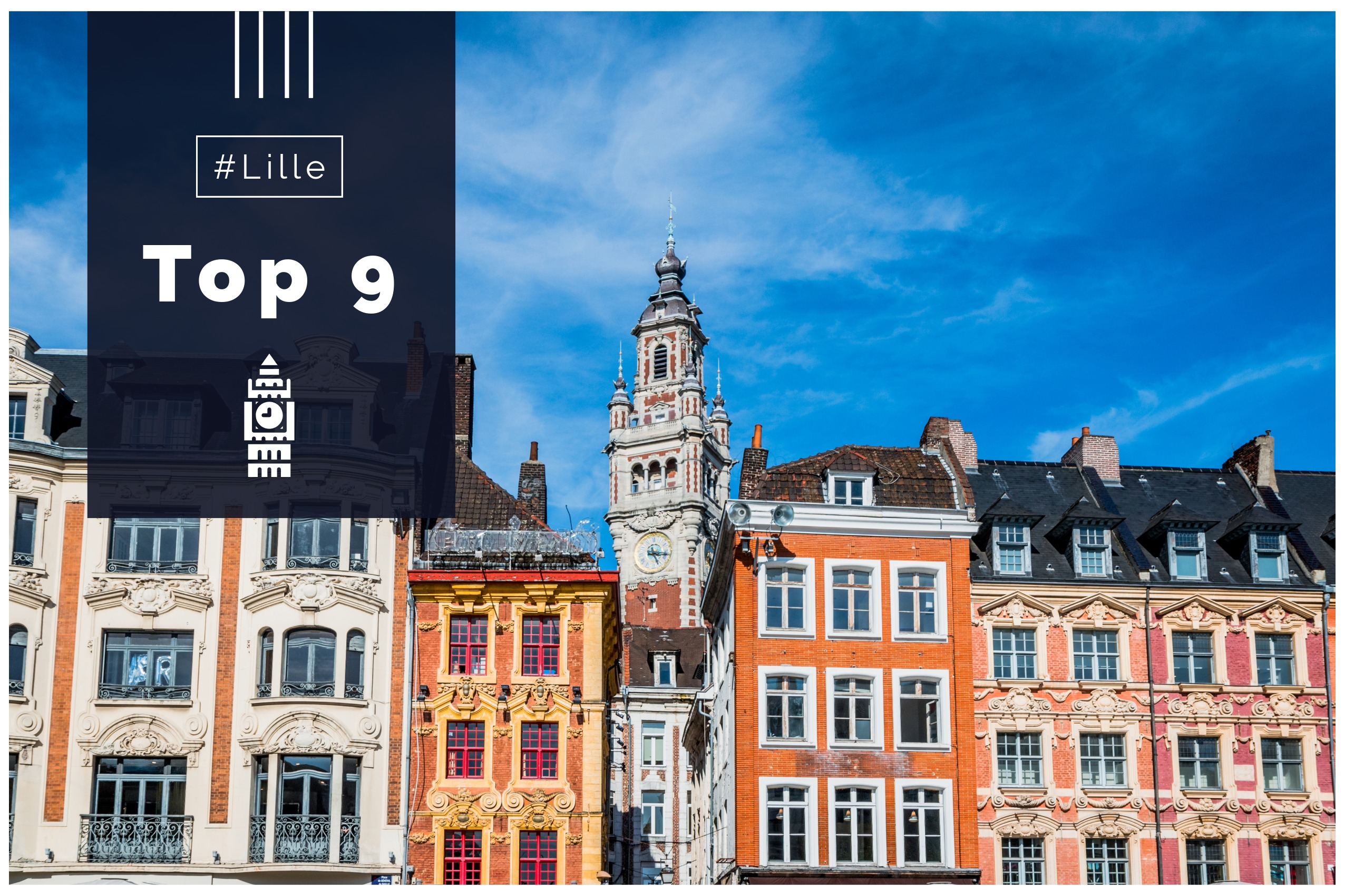
The first encounter with Lille almost always begins at the Grand’Place, officially Place du Général-de-Gaulle. It is here that the city immediately reveals its character: elegant facades, constant activity, cafés, passersby, and an impression of balance between tradition and contemporary vitality. In the centre, the Goddess Column commemorates the city’s resistance during the siege of 1792, while all around unfolds one of the most captivating urban landscapes in northern France. But the true gem lies just next door: the Old Stock Exchange, built in the 17th century, undoubtedly Lille’s most beautiful civic monument. Its Flemish architecture, with its 24 identical houses arranged around an inner courtyard, perfectly encapsulates the city’s commercial prosperity.
You absolutely must visit the courtyard of the Old Stock Exchange. There you’ll find booksellers, sometimes chess players, sometimes tango dancers on summer evenings, and always this feeling of being in a place that is both historic and vibrant. From there, you can easily explore the city centre, reach the opera house, stroll along the shopping streets, or venture into Old Lille.

Getting lost in the streets of Old Lille
Old Lille is often what makes visitors fall in love with the city. Cobblestones, brick facades, elegant town houses, stylish shop signs, pastry shops, bookshops, boutiques, and more or less hidden alleyways make up a neighbourhood where walking slowly, almost naturally, is the order of the day. It’s not a static setting, but a vibrant, inhabited, bustling, and gourmet district, sometimes chic, but never stuffy. Strolling through it, you perceive what makes Lille unique: a still-visible Flemish heritage, a pleasant urban density, and a genuine sense of well-being. Certain streets, like Rue de la Monnaie, Rue de Gand, and Rue Esquermoise, particularly embody this atmosphere.
The pleasure of Old Lille also lies in what it allows: entering Méert, looking at the courtyards, gazing up at the gables, stopping at a terrace, then leaving without a strict itinerary. One can easily spend several hours there without feeling like one is “visiting” in the traditional sense.

Climb to the top of the Town Hall’s belfry
The belfry of Lille City Hall is one of the city’s most prominent vertical landmarks. A UNESCO World Heritage Site, along with other belfries in Belgium and France, it offers a panoramic view of the city’s structure: the old town centre, grand boulevards, districts annexed in the 19th century, the modern silhouettes of Euralille, and, further afield, the horizons of the Flemish plain. The ascent is easily made via an elevator, ensuring the site is very accessible.
At the top, the view is spectacular without being overwhelming, and particularly useful at the beginning of a stay to understand the urban geography. Just below, the Porte de Paris and the City Hall area present another side of Lille, more institutional but very interesting.

Visit the Palace of Fine Arts
The Palais des Beaux-Arts in Lille is one of France’s great museums, and that’s no exaggeration. Its extensive collections encompass painting, sculpture, antiquities, ceramics, and above all, the famous relief maps—models of fortified cities that form one of its most fascinating collections. Here you’ll find works by Rubens, Van Dyck, Goya, and Delacroix, as well as a vast panorama of European art history. The monumental building itself, facing the Place de la République, sets the tone. This is a visit that shouldn’t be dismissed as “just another museum”: it illuminates both Lille’s passion for the arts and its historical ambitions.
The museum is especially welcome when the weather turns bad or when you want to slow down the pace of your stay. You need at least two hours for a good visit, more if you like to take your time.

Take a walk around the Citadel and in the Deûle park
The Citadel of Lille, often called the “Queen of Citadels,” is a reminder of the city’s strategic importance in the history of the Kingdom of France. Designed by Vauban after Louis XIV captured Lille, it remains one of the great masterpieces of classical military architecture. Access to the interior of the site is still regulated as the citadel is still occupied, but its surroundings already offer a truly remarkable experience.
The walks all around, between trees, canals, footbridges, and views of the bastions, are among the most pleasant in Lille. You get a sense of a different city, greener, more open, almost bucolic. The Citadel Park and the Deûle area offer an ideal respite after the narrow streets of Old Lille.

Discover the Wazemmes market
The Wazemmes market is one of Lille’s most vibrant and popular spots. It shouldn’t be visited as a mere tourist attraction, but as a true slice of the city. The stalls, the crowds, the aromas, the produce from the North, North Africa, elsewhere in Europe, and even from within the neighbourhood itself—all of this creates a dense and lively human landscape. You’ll find fruits, vegetables, fabrics, flowers, clothing, international products, local specialities, and a multitude of atmospheres that make Wazemmes a unique district within Lille. The market is particularly bustling on certain days, and you need to enjoy crowds to fully appreciate it.

Visit the birthplace of Charles de Gaulle
In a quiet street in Old Lille, the Charles de Gaulle Birthplace Museum offers an intimate yet historical experience. The future general and president was born there in 1890, in his maternal grandparents’ house. Much of the museum’s appeal lies in its meticulous reconstruction of a Belle Époque bourgeois home. Visitors discover not only an illustrious figure, but also a family, social, and cultural world that sheds light on his origins. The visit is immersive, almost intimate, with furnished rooms, a winter garden, and a museum complex that also explores contemporary history.
This house is worth a visit even for those who aren’t particularly interested in Gaullist figures. It complements perfectly the exploration of Old Lille by adding a more recent historical dimension to a district often perceived solely through its architecture.
Take a trip to Roubaix for La Piscine
If you have a little more time, one of the best possible extensions to your stay is La Piscine in Roubaix. Housed in a former Art Deco swimming pool, this museum has become one of the major cultural attractions in the Lille metropolitan area. The setting is spectacular: a central pool, rows of sculptures, light filtered through the large glass roof, and collections blending fine arts, applied arts, textiles, and design. The place is both aesthetically pleasing and very consistent with the industrial history of the region. It tells another story of the North, where the beauty of form engages in a dialogue with the history of the working-class and textile industry.
The trip is very easy from Lille thanks to the tram or metro, depending on the route chosen. You can easily spend half a day there, or even more if you extend your visit to Roubaix.

Discover the Villa Cavrois, a modernist masterpiece
Another highly recommended excursion is the Villa Cavrois in Croix, a major work by Robert Mallet-Stevens. This modernist residence, designed for the industrialist Paul Cavrois in the early 1930s, is more than just a bourgeois home; it is an architectural manifesto. Everything about it speaks of light, functionality, lines, materials, and an ideal of modern comfort. Spectacularly restored, the villa offers a concrete understanding of French domestic modernism in its most ambitious form. It is a place of architecture, of course, but also a profoundly elegant space, where emptiness, perspectives, and details are as important as the furniture and volumes.
The visit combines very well with a multi-day stay in Lille, especially if you appreciate architecture or want to explore beyond the usual tourist routes. Access by tram and then on foot is quite easy.

There you have it! We hope this selection of things to do in Lille has helped you plan your trip. Don’t hesitate to subscribe to our YouTube channel for more destination ideas.