📋 Table of Contents
📌 Read in :  Français (French)
What to do in Vilnius? A Baltic capital on a human scale, Vilnius blends one of the best-preserved Baroque old towns in Europe (a UNESCO World Heritage Site) with a vibrant creative scene fueled by contemporary museums, studios, cafes, and bohemian neighborhoods like Užupis. Climb towers to admire the honey-colored rooftops, wander through centuries-old university courtyards, descend beneath the city to explore its Roman layers, and then head towards the Vilnia River and parks where cliffs and windmills seem to grace the heart of the capital. Summer or winter, the city is easy to navigate: a pedestrian-friendly center, convenient transportation, affordable restaurants, and surprisingly warm hospitality. Here’s a helpful FAQ to help you plan your trip, followed by nine must-see experiences—with some local alternatives thrown in here and there.
🗒️ Time of year, hotels: what you need to know before visiting Vilnius
Before we get into things to do in Vilnius, here are some useful tips.
What is the best time to visit?
From May to September, the Old Town comes alive outdoors: terraces, festivals, strolls along the Vilnia River, and sunset views from the viewpoints. Summer is the most vibrant season, while spring and early autumn offer superb light and milder temperatures. Winter, despite the chill, is magical: markets, quiet museums, cozy cafes, and unobstructed views from the towers and the TV Tower on clear days. The Old Town’s UNESCO status guarantees a concentration of Gothic, Renaissance, and Baroque architecture within a compact area—perfect for walking.
How many days should I plan for?
Two full days allow you to cover the cathedral and its bell tower, the climb to Gediminas’ Tower, Užupis, a few churches (St. Anne’s/Bernardins), the Gate of Dawn, and a major museum (KGB/Occupations or MO Museum), plus an evening by the Neris River. With three or four days, add the University (lectures and St. John’s Church), the TV Tower , Pavilniai Regional Park (Belmontas, Pūčkoriai Cliffs), and, as a bonus, a half-day at Trakai Castle.
How to get around (and what about transport tickets)?
The city center is easily explored on foot. Buses and trolleybuses are frequent and inexpensive; the Vilniečio card (e-ticket) allows you to load tickets by the hour or by the day (1, 3, or 5 days). A Vilnius Pass is also available (24/48/72 hours) offering entry and discounts to numerous attractions. From the airport, direct buses (1, 2, 88, 3G) reach the city center in approximately 20 minutes; a night bus line, 88N, operates from 10:30 PM to 5:30 AM.
Which restaurants should I try?
Start with soup served in a bread bowl, pickled herring, or cepelinai (potato dumplings). Explore the food halls of the Grigiškės/Gründer harbor (the local equivalent of Grandi), and for a creative touch, try the contemporary bistros around Užupis and Literatų Street. Sweet treats (pavlova, poppy seed cakes) can be enjoyed in the cafes of the Old Town; local beer pairs perfectly with rye dishes.
Where to stay (3 popular and well-located hotels)?
Hotel Pacai (Old Town) occupies a reimagined 17th-century palace with a spa and contemporary design, nestled in the heart of the historic alleyways. Neringa Hotel (Gediminas Avenue) blends modernist heritage, bright rooms, and a renowned restaurant. Radisson Collection Astorija (Old Town) offers rooms with views of the towers, an indoor pool, and convenient access to the Glass Quarter and Halės Market.
🔝 What are the must-do things in Vilnius?
Now let’s get to the heart of the matter and see what there is to do in Vilnius. Only the must-sees, of course.
Climb Gediminas’ tower to frame the postcard
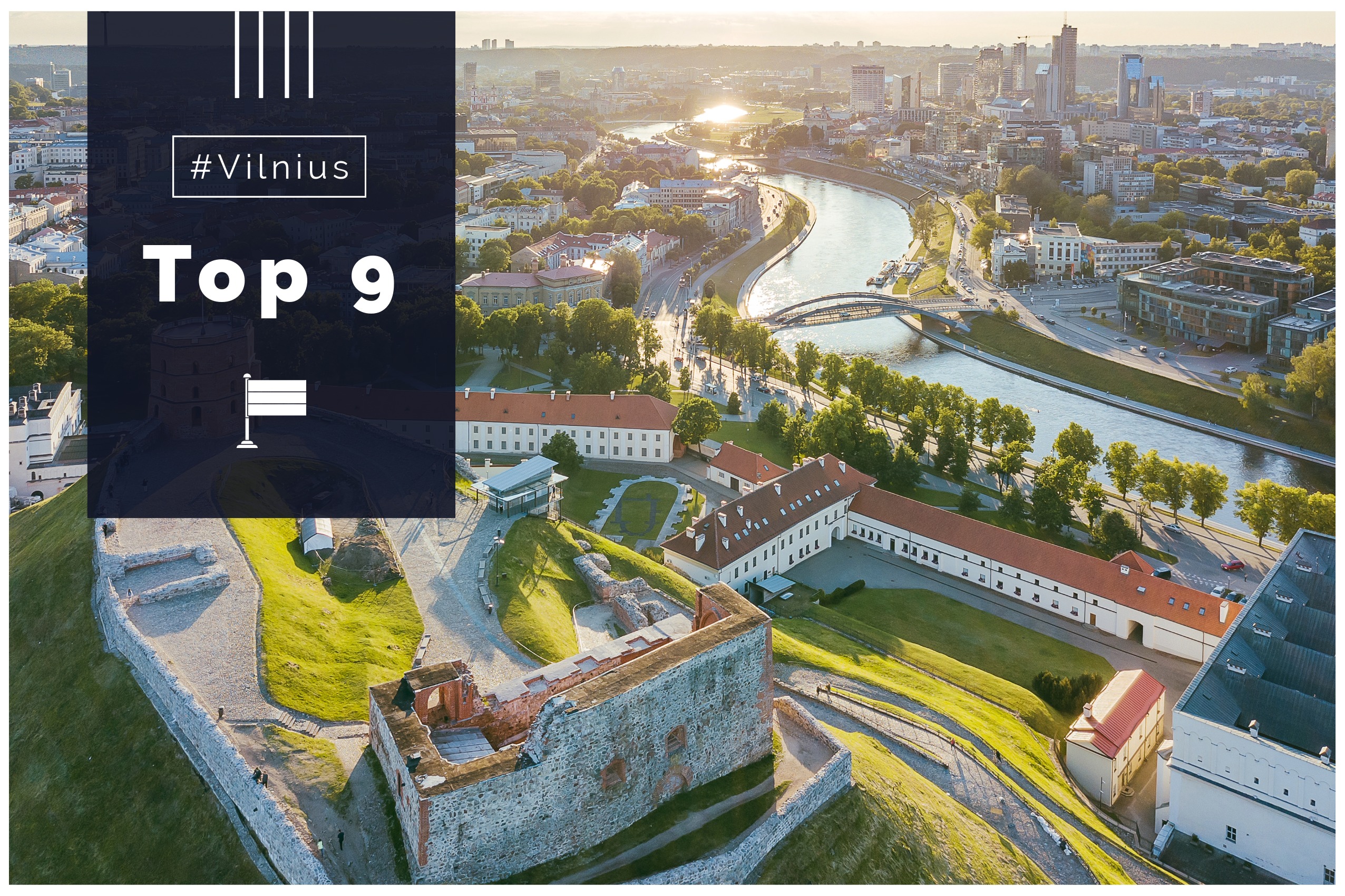
Perched atop its hill, Gediminas Tower offers the most iconic panorama: the Baroque rooftops of the Old Town, the cathedral dome, the ribbons of the Neris River, and modern skylines in the distance. It can be reached on foot via a marked path or by funicular, depending on opening times. Inside, an exhibition recounts the history of the ancient fortress and the Grand Duchy. Arrive early for the soft morning light or aim for late afternoon for the golden hour; on a clear day, the view extends to the edge of the woods. Combine this climb with a visit to Cathedral Square and the nearby belfry for a trio of landmarks completed in under two hours. Practical tip: wear non-slip shoes if the ground is wet, and consider a combined ticket if you are also visiting other areas of the National Museum.

Enter the cathedral and climb the bell tower
The white cathedral-basilica of Vilnius borders a vast esplanade, a popular meeting place for the city. Inside, you’ll find chapels, Baroque masterpieces, and the tombs of the rulers. Just next door, the Bell Tower (approximately 52–57 m depending on the spire) is open to visitors and offers a superb view of the statues on its roof and the vista of Gediminas Avenue. The climb also recounts the history of the bell tower and the great fires that have scarred the city. In good weather, it’s one of the best vantage points in the city center; in winter, the atmosphere is particularly photogenic when snow highlights the cornices. Continue along Pilies Street to reach cafes, bookstores, and artists’ studios.

Greet the Virgin at the Gate of Dawn
The only remaining vestige of the old city walls, the Gate of Dawn (16th century) houses a revered icon of the Virgin Mary, renowned for its miracles. It is accessed through a small chapel above the passageway, still very popular with worshippers from all over Central Europe. The place embodies the spiritual soul of Vilnius, a crossroads of rites and cultures. The street that descends beyond reveals pastel facades, Polish churches, and shops. Early in the morning, the light streams through the arch and floods the cobblestones; later, people stop to listen to a hymn rising from the chapel. Combine this visit with the Orthodox Church of the Holy Spirit and, a little further down, with the Halės Market for coffee and poppy seed pastries.

Crossing the river to Užupis, the “republic” of artists
On the other side of the Vilnia River, Užupis proclaimed its “republic” in 1997, with a poetic constitution displayed on multilingual plaques. Between workshops, street art, terraces, and small galleries, you can feel the city’s creative energy. Start at the Lovers’ Bridge, the Angel of Užupis, then lose yourself in the narrow streets until you reach Literatų Street, dotted with art plaques dedicated to writers. While the neighborhood has become more upscale, it retains a gentle irreverence. Return to the Old Town along the banks of the Vilnia, perfect for a break in the shade. If you enjoy playful “micro-states,” read a few articles of the constitution there—it even grants rights to… cats and dogs!

Admire the Sainte-Anne and the Bernardine complex
A true gem of flamboyant brickwork, the Church of Sainte-Anne (1495–1500) captivates with its intricately carved façade and delicate arches; right next door, the Bernardine Church forms a Gothic-Renaissance ensemble of rare elegance. If possible, enter during quiet hours to appreciate the silence and the sculpted details; admission is free, and opening times differ between the two churches. Legend has it that Napoleon wanted to carry it away “in his hand”—one can understand the enthusiasm for such brickwork’s refinement. Afterward, stroll to the Bernardin Park for a moment of respite from the heat, or head back up towards the University, a ten-minute walk. Photographer? Aim for late afternoon when the brick takes on a reddish hue and the steeples stand out against the sky.

Understanding the 20th Century at the Museum of Occupations and Struggles for Freedom
Housed in the former KGB headquarters, this museum documents the Nazi and Soviet occupations, repression, and Lithuanian resistance. Exhibits, cells, artifacts, and testimonies combine to create a powerful experience, recommended for visitors wishing to grasp the country’s recent history. Allow 1.5–2 hours depending on your pace; family rates and discounts are available. After your visit, take a stroll along the banks of the Neris River or relax in a café. This moment of reflection sheds new light on the baroque facades of the surrounding streets: in Vilnius, beauty and suffering often echo each other from one block to the next.

View of the city 170m from the TV Tower
Rising in the southwest, the TV Tower is the tallest structure in the country. Its enclosed observation deck (and open-air terrace in summer) offers a panoramic view from 170 meters: on a clear day, the view extends up to 50 kilometers. A panoramic bistro allows you to linger, and guided tours reveal the building’s technical side. It’s the perfect experience when the weather turns: you stay warm while taking in the city. Winter sunsets, when the light skims across the frozen plains, are sublime. Accessible by public transport or taxi; on-site, there are high-speed elevators, souvenirs, and temporary exhibitions.

Get some fresh air at Pavilniai Regional Park (Belmontas & Pūčkoriai Cliffs)
A few kilometers to the east, Pavilniai Regional Park offers valleys, forests, and the spectacular Pūčkoriai cliff , a geological monument sculpted by erosion. Around the old mill, the Belmontas site combines paths, footbridges, and small waterfalls—ideal for a nature break between museum visits. It’s accessible by bus and a short walk; in summer, bring water, and in spring/autumn, wear shoes suitable for wet terrain. The viewpoints offer beautiful vistas over the Vilnia Valley, especially at the end of the day. Perfect for families, teenagers who enjoy hiking, or for a simple picnic.

Choosing your contemporary museum: MO Museum (city center) or University (Courtyards & St. John’s church)
The MO Museum , a building designed by Daniel Libeskind, presents modern and contemporary Lithuanian art (from the 1950s to the present day) in a clear and well-designed setting, with impressive temporary exhibitions; open most days, closed on Tuesdays. As a heritage alternative, the Vilnius University complex (16th century) is open to visitors: thirteen courtyards, St. John’s Church , and, seasonally, a bell tower offering a different perspective over the rooftops. One tells the story of contemporary art, the other of five centuries of university history in the heart of the Old Town: two complementary perspectives for understanding the spirit of the place. Depending on the weather and your interests, visit one in the morning, the other in the afternoon.

As a bonus: Trakai Castle on its island
If you have half a day, head to Trakai (30–40 min) to discover its red-brick castle perched on an island connected by walkways. The museum traces the history of the duchy and the Tatar/Karaiti communities, while a walk along the ramparts offers beautiful views of Lake Galvė. In summer, rent a rowboat; in winter, the ice and mist give the site a fairytale atmosphere. It’s the perfect excursion to complement a stay in Vilnius, combining heritage, scenery, and the tranquility of the lake. Combined tickets with the peninsular castle are available depending on the season.

There you have it! We hope this list of things to do in Vilnius has helped you plan your trip. Feel free to contact us for any further suggestions.