
📋 Table of Contents
📌 Read in :
 Français (French)
What to do in Braga? In northern Portugal, Braga is one of those cities that seems to hold far more treasures than one might initially imagine. People often come for the Bom Jesus do Monte sanctuary, one of the country’s most famous sites, but the city deserves much more than a quick visit. Braga combines a charming old town layout, lively squares, a cathedral of exceptional historical importance, numerous religious buildings, well-maintained gardens, and a vibrant student atmosphere that keeps the city centre from becoming solely defined by its heritage.

In just a few days, you can alternate between narrow streets, viewpoints, museums, hilltop sanctuaries, and delicious food breaks in a city that is spiritual, vibrant, and easily accessible from Porto. First, here’s a clear FAQ to help you plan your trip, followed by eight unmissable experiences to discover the city.
🗒️ Dates and hotels: what you need to know before visiting Braga
Before we get into things to do in Braga, here are some useful tips.
What is the best time to visit?
Braga can be visited year-round, but it is particularly pleasant from spring to early autumn. Spring beautifully showcases the gardens, squares, and views of the surrounding hills, while maintaining comfortable temperatures for walking in the city centre and climbing to the major shrines. Summer brings a more vibrant and lively atmosphere, although some hours can be too hot for long walks.
September and October often offer an excellent compromise, with soft light and a more relaxed pace of life. In winter, Braga retains significant historical and religious appeal, although the focus will likely be more on monuments, museums, and the urban atmosphere than on panoramic views.
How many days should I plan for?
Two days are enough to see the essentials of Braga: the historic centre, the cathedral, the Santa Bárbara garden, the Arco da Porta Nova, and at least one of the major sanctuaries, ideally Bom Jesus do Monte. With three days, the trip becomes much more balanced, as you can add the Sameiro sanctuary, a museum like Biscainhos, and take the time to stroll through the old town without rushing from one visit to the next.
Four days or more allows you to enjoy Braga at a more relaxed pace, alternating between heritage sites, scenic viewpoints, relaxing on terraces, and excursions to the surrounding Minho region. The city works very well for a long weekend, but it deserves more than just a quick stopover from Porto.
How to get around easily in Braga?
Braga’s historic centre is best explored on foot. The main monuments, squares, and old streets are clustered within a pleasant area, making for a leisurely and intuitive visit. However, reaching Bom Jesus do Monte or Sameiro requires additional transportation, whether by car, taxi, bus, or tour, depending on the season. If you’re staying within the city itself, a car isn’t necessary. However, it can be useful if you plan to explore further afield in the Minho region. For most travellers, the ideal approach is to explore the centre on foot and then book one or two trips to the sanctuaries in the hills.
How do I get to the city center from the airport?
The easiest way to get to Braga is usually via Porto Airport. From there, several options are available. These include direct Get Bus connections between Porto Airport and Braga, arriving in the city’s bus station. Alternatively, you can travel by Portuguese rail, using CP services, from Porto to Braga. This excellent accessibility makes Braga a very convenient destination for a short break, especially for those wishing to combine a historic city with an easy day trip from northern Portugal.
Is there a useful pass for visiting the city?
Braga doesn’t rely on a single city pass as readily available as in some major capitals, but there are very useful combination tickets depending on the type of visit planned. Braga Cathedral, for example, offers various combined ticket options including the cathedral, chapels and choir, as well as the treasury-museum.
Where to stay in Braga + three popular hotels to try
Staying in the historic centre is often the best choice for a first visit. This allows you to explore the lower town on foot, enjoy the squares in the evening, and easily return to your accommodation between sightseeing. Those who prefer a larger hotel, with a spa or modern amenities, can also consider areas slightly further out, but well-connected to the centre.
Finally, some travellers choose to stay near Bom Jesus to enjoy the peace and quiet and more scenic surroundings, but for a first visit, the old town generally remains the best place to stay.
The Vila Galé Collection Braga is highly regarded for its location in a renovated historic hospital, close to the monumental centre. The Meliá Braga Hotel & Spa is better suited to those seeking a more contemporary stay with a spa and full services. The Burgus Tribute & Design Hotel will appeal to travellers who prefer a more intimate setting, well-positioned for exploring the old town on foot.
Is Braga an expensive destination?
Braga remains generally more affordable than many major urban destinations in Western Europe. The budget depends mainly on the level of accommodation chosen and the type of dining desired, but sightseeing is often reasonably priced, and much of the enjoyment comes simply from walking, exploring the squares, gardens, and viewpoints.
Compared to Porto or Lisbon (see our guide), Braga can seem like a more budget-friendly getaway, especially outside of peak season. For a heritage city in northern Portugal, it offers a good balance between cultural richness and affordable prices.
🔝 What are the must-see things to do in Braga?
Now let’s get to the heart of the matter and see what there is to do in Braga. Only the must-sees, of course.
Climb to Bom Jesus do Monte and discover one of the great symbols of Portugal
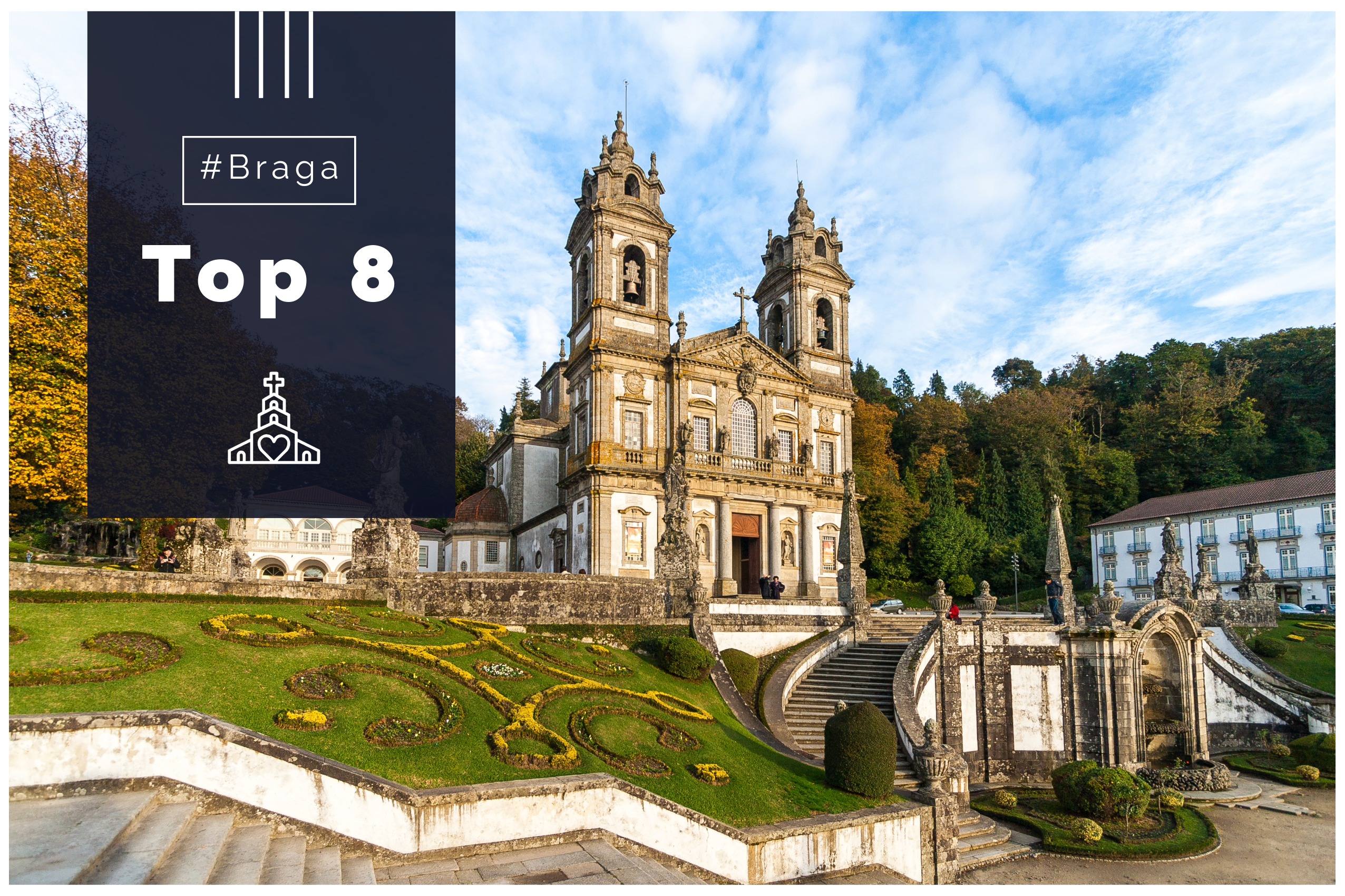
If there’s one must-see in Braga, it’s undoubtedly Bom Jesus do Monte. The sanctuary overlooks the city from the slopes of Mount Espinho and is one of the most iconic images in the country. What immediately impresses is, of course, the grand Baroque composition of the complex: the church at the summit, the monumental staircase, the statues, the chapels, the successive terraces, and the powerful interplay between architecture, spirituality, and landscape.
The site is also a UNESCO World Heritage Site, which highlights its development over more than six centuries and its importance as a religious cultural landscape. Arriving there immediately evokes a sense of monumentality, but also of elevation in both a literal and symbolic sense.
The visit isn’t just about photographing the famous staircase. You should take the time to climb it, partially descend it, observe the details, and then enjoy the panoramic views of Braga and its surroundings. The sanctuary can be reached on foot, by car, or via the historic funicular, which was put into operation in the 19th century and is still powered by a water system, adding to its charm (read more below).

Visit the Sé de Braga, one of the most important cathedrals in the country
The Sé Cathedral in Braga is an essential stop, not only because it shapes the old town, but also because it is deeply rooted in Portugal’s religious history. Construction began in the late 11th century, and it was consecrated in 1089, making it the first Portuguese cathedral built even before Portugal existed as an independent kingdom. This antiquity immediately adds another layer of significance to the visit. You don’t just enter a beautiful building; you step into a place that encapsulates centuries of religious, political, and artistic history.

Stroll through the historic center to the Arco da Porta Nova
Braga is a city perfectly suited to walking, and one of the best things to do is simply stroll through its historic centre. Among its most iconic landmarks is the Arco da Porta Nova, a veritable urban icon. Built in the early 16th century and later remodelled in the 18th, it represents one of the city’s ancient gates and holds a powerful place in the local imagination. Passing through it almost feels like stepping into another Braga, between ancient heritage and contemporary urban life.
But the appeal of this stage isn’t solely due to the arch. From there, you should let the city reveal itself through its streets, squares, shops, cafes, and facades. Braga isn’t a static museum city. It maintains a real vibrancy, fuelled in part by its student population and its regional role.

Take a break in the Santa Bárbara garden
The Santa Barbara Garden isn’t a big, spectacular monument, and that’s precisely what makes it so delightful. It’s a garden inspired by the Italian Renaissance, and it provides a welcome respite in the city centre between visits to churches or museums. It’s a place people come to as much for the floral displays and tranquillity as for the pleasure of seeing stone and greenery interact. In a city dominated by religious architecture and monumental facades, this kind of pause is invaluable.

Discover the Sameiro sanctuary for the view and atmosphere
While Bom Jesus do Monte is the major must-see site, the Sameiro sanctuary also deserves a prominent place in your itinerary. Also located on the heights, it offers a different, broader, more open experience, often a little calmer depending on the time of day. Sameiro is one of Portugal’s major Marian pilgrimage sites and perfectly complements a stay in Braga, adding another spiritual dimension to the trip. Where Bom Jesus impresses with its staircase, its narrative, and its Baroque theatricality, Sameiro captivates more with the monumentality of its basilica and the expansive surrounding landscape.
This is an excellent idea for those staying at least two or three days. The detour allows for a better understanding of Braga’s unique place in Portuguese religious geography.

Enter the Biscainhos Museum for another side of Braga
The Museu dos Biscainhos offers a welcome respite from the grand narrative of sanctuaries and cathedrals, allowing visitors to discover a more aristocratic and domestic side of Braga. Housed in a former palace, it provides access to another facet of local history: interiors, decorative arts, gardens, and a certain urban residential culture. This is precisely the kind of visit that greatly enriches a trip, because it reveals that Braga is not only a religious city but also a city of homes, social standing, and refinement.

Take the historic Bom Jesus funicular
Even if you’ve already planned a visit to Bom Jesus do Monte, it’s worthwhile to experience one thing in itself: the Bom Jesus funicular. The official website and VisitPortugal remind us that it’s an impressive feat of 19th-century engineering, inaugurated in 1882, and that it continues to operate thanks to a hydraulic water system. For that reason alone, the ride is truly worthwhile. You’re not simply using a practical means of getting up or down; you’re experiencing a small piece of Portugal’s still-functioning technical heritage.

End the day in a central square with the flavours of Minho
As is often the case in Portugal, it would be a shame to completely separate sightseeing from culinary delights. Ending the day in a square or on a lively street in the centre of Braga is an integral part of the experience. After the Bom Jesus steps, the cathedral halls, the ancient alleyways, and the panoramic views, the local cuisine offers another way to understand the region.
The Minho region has a strong, generous, and often very convivial culinary identity that blends perfectly with the pace of travel. Braga is ideal for this end of the day, as its centre remains vibrant, bustling, and pleasant to explore even after dark.
There you have it! We hope this list of things to do in Braga has helped you plan your Portuguese trip. Have a great trip!