
📋 Table of Contents
📌 Read in :
 Français (French)
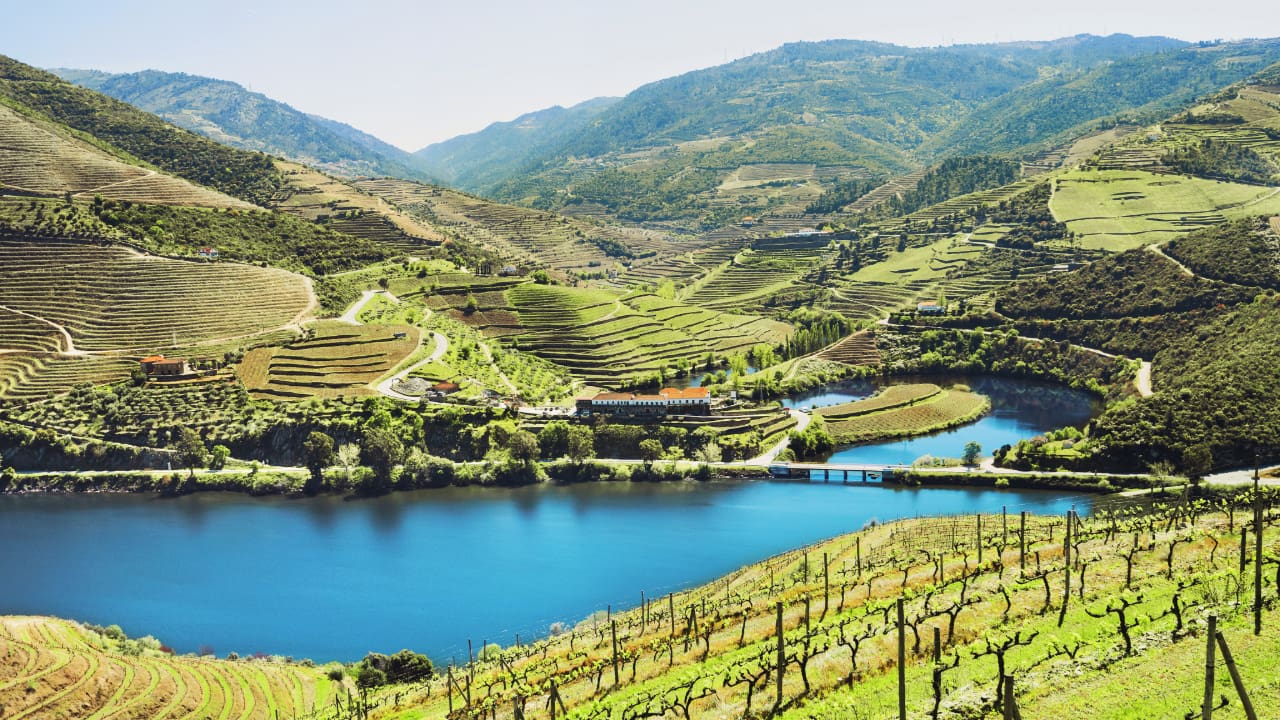
The Douro Valley, winding and fertile, stretches across northern Portugal, offering a breathtaking natural spectacle that has captivated visitors for centuries. Carved by the Douro River as it meanders from Spain to the Atlantic Ocean, passing through deep gorges and steep hills, this region is renowned for its terraced vineyards, a distinctive feature that earned the valley its UNESCO World Heritage status.

Can you already picture yourself cruising through these enchanting landscapes? Just wait because in this article, we’ll tell you what to see and do in the Douro Valley. For a truly memorable stay.
How to get to the Douro Valley from Porto?
Why Porto? Because it’s the closest major Portuguese city and is very well served by airlines, especially low-cost carriers.
Travelling to the Douro Valley by train
Opt for a scenic train getaway from São Bento station in Porto to Peso da Régua station in the heart of the valley.
Please note that the train journey takes approximately 2 to 3 hours, depending on the type of train you choose. Some direct trains may reduce the travel time. Throughout the journey, you will be treated to spectacular views of the Douro River.
But with this type of transport, you will obviously be limited in your movements once you arrive at your destination.
Rent a car to visit the vineyards
For greater flexibility, rent a car from Porto and take the A4 motorway towards Vila Real. Then, follow the signs for the Douro Valley. This is the mode of transport we recommend.
If you don’t rent a car, a taxi is the fastest way to travel from Porto to the Douro Valley. However, it’s expensive: expect to pay between €130 and €160 for a journey of approximately 1 hour and 15 minutes.
The bus, the most economical way
To travel from Porto to the Douro Valley by bus, start by identifying the bus routes serving the region. You have several operators to choose from, such as Iberocoach, Porto Campanhã Bus, Alsa …
Next, head to Porto’s main bus station, where you can buy a ticket to your destination in the Douro Valley.
Be sure to check bus schedules and routes beforehand, as they may vary. Below, you’ll find some tour offers with our partner Get Your Guide 👇
What can you visit in the Douro Valley?
Beyond its winemaking heritage, the Douro Valley captivates with its diverse topography, offering visitors a mosaic of panoramas. From high plateaus to deep valleys, every bend in the river reveals picturesque villages and historic quintas (estates), testifying to the harmony between man and nature that characterizes this region.
The valley is also a haven for outdoor enthusiasts: hiking, river cruises and wine tastings are all experiences that allow you to explore the cultural and natural richness of the Douro Valley.
Here are the places you shouldn’t miss.
Peso da Régua, the heart of the wine world
Peso da Régua (🗺️ map), often simply called Régua, is a charming town located in the heart of Portugal’s Douro Valley, playing a key role in the region’s wine industry. Historically, it was the central point where barcos rabelos transported barrels of Port wine to Vila Nova de Gaia.
Today, Régua is renowned for its Douro Museum (official website), which celebrates the history of wine production in the region. A visit is highly informative. Surrounded by hills covered in terraced vineyards, the town offers spectacular views and serves as an ideal starting point for exploring the surrounding wineries and enjoying scenic river cruises on the Douro.

Pinhão, the authentic Portuguese village
Pinhão (🗺️ map), nestled in the heart of Portugal’s Upper Douro wine region, is a picturesque village renowned for its privileged location along the winding curves of the Douro River. Surrounded by steep hills adorned with terraced vineyards, Pinhão is considered one of the valley’s gems, offering breathtaking scenery that perfectly illustrates the region’s beauty and agricultural ingenuity. The village is famous for its train station, decorated with hand-painted azulejo panels that tell the story of winemaking in the valley.
Pinhão serves as an anchor point for those wishing to explore the surrounding quintas, offering Port wine tastings and authentic wine tourism experiences.

Lamego, the sacred place
Lamego (🗺️ map), located on the southern slopes of the Douro Valley in Portugal, is a city rich in history. Renowned for its impressive sanctuary, the Santuário de Nossa Senhora dos Remédios, accessible by a majestic Baroque staircase of nearly 700 steps, it offers a unique combination of spirituality and architecture.
The town – like others in the region – is also renowned for its surrounding vineyards which produce high-quality table wines, distinct from the famous Port wine.
Lamego boasts a charming historic centre, with cobbled streets, ancient churches, a medieval castle, and a museum showcasing local history and religious art. Lamego’s atmosphere, combined with its traditional festivals and local cuisine, makes it a must-see destination for those exploring the Douro region.

The understated charm of Sabrosa and Provesende
Sabrosa (🗺️ map), located in the Upper Douro region, is the birthplace of Fernão de Magalhães (Fernand Magellan), the famous navigator and explorer. Sabrosa combines historical heritage with the natural beauty of the Douro Valley, and is also distinguished by its traditional architecture and archaeological sites.
Not far from there, Provesende (map), a picturesque village in the municipality of Sabrosa, is a remarkable example of the Douro wine region’s cultural heritage. Classified as a wine village, it offers breathtaking views of the region’s typical terraced vineyards. With its cobbled streets, historic houses, and imposing church, Provesende is a time capsule reflecting traditional Portuguese life.

Amarante and its beautiful churches
In Amarante (🗺️ map), explore the historic centre with its iconic churches, the São Gonçalo Bridge, and the Amadeo de Souza-Cardoso Municipal Museum. Stroll along the Tâmega River, sample local desserts, and finish with a wine tour at Casa de Cello to taste two Vinho Verde terroirs.

A leap back in time in Torre de Moncorvo
Torre de Moncorvo (🗺️ map), located in northeastern Portugal in the heart of the Trás-os-Montes province, is renowned for its vast olive groves and iron mines. It is an enticing blend of nature, history, and culture. The town itself, with its picturesque historic centre, offers visitors a glimpse into its past through its narrow streets, traditional houses, and iconic landmarks, such as the Matriz Church and the pelourinho (pillory).
The region is also well-known for its crafts, including iron jewellery and traditional textiles.

Take a cruise on the Douro River
You can also embark from Porto for a sensory escape along the enchanting meanders of the Douro Valley on a memorable cruise. Let yourself be lulled by the shimmering waters as the majestic vine-covered hills glide by under the gentle kiss of the sun.
CroisiEurope offers several Douro River cruise itineraries, ranging from 6 to 8 days. These cruises allow you to explore iconic locations such as Porto, Régua, Pinhão, Vega de Terron, and even Salamanca in Spain. Expect to pay at least €1,500 per person for a week-long cruise.
Embark on a wine route in the Douro Valley
The Douro Valley wine routes in Portugal are among the most famous in Europe. They offer an unforgettable wine adventure, immersing travellers in a spectacular landscape of terraced vineyards, a UNESCO World Heritage Site.
Need a little gourmet itinerary? Here it is:
A getaway to the Douro Valley can begin in Porto (here’s a selection of hotels with Douro River views), crossing the picturesque Dom Luís I Bridge to explore Vila Nova de Gaia, where a multitude of port wine cellars await you for guided tastings. Pinhão, often considered the wine heart of the Douro, is an ideal starting point for excursions, offering stunning views of the vineyards and the opportunity to explore the region by train, boat, or car. Quinta da Pacheca and Quinta da Casa Cimeira are examples of estates where visitors can enjoy memorable wine tourism experiences, ranging from wine tasting to accommodation in unique wooden barrels converted into hotel rooms.

For those looking to travel the valley by car, the route may include stops at viewpoints such as Casal de Loivos, offering stunning views of Pinhão, or São Salvador do Mundo, from where much of the Douro can be seen.
Do you have plenty of time? A tour through the Douro Valley can also be combined with visits to other wine regions of Portugal, offering a broader exploration of the country’s wine diversity. For example, a road trip could take you from Porto to Lisbon (📖 read our guide), passing through historic cities like Guimarães and Braga, before immersing yourself in the Douro Valley.
Timing and planning: some tips for visiting the Douro Valley
We couldn’t finish this article dedicated to the Douro Valley in Portugal without some tips for preparing your getaway.
- Choose the right time : The best time to visit the Douro Valley is spring (May to June) or autumn (September to October). These months offer pleasant weather, colourful landscapes, and the opportunity to participate in the grape harvest in autumn. Yes, yes.
- Plan your travels : Renting a car is highly recommended to explore the Douro Valley at your own pace. This allows you the flexibility to visit remote vineyards, small villages, and panoramic viewpoints. Be sure to check road conditions, as some can be narrow and winding.
- Book your tastings well in advance: During your visit to the wineries, some may require advance booking for tastings. Be sure to plan ahead to guarantee a place.